_edited.png)
Featured artist interview: Kaltra seferi
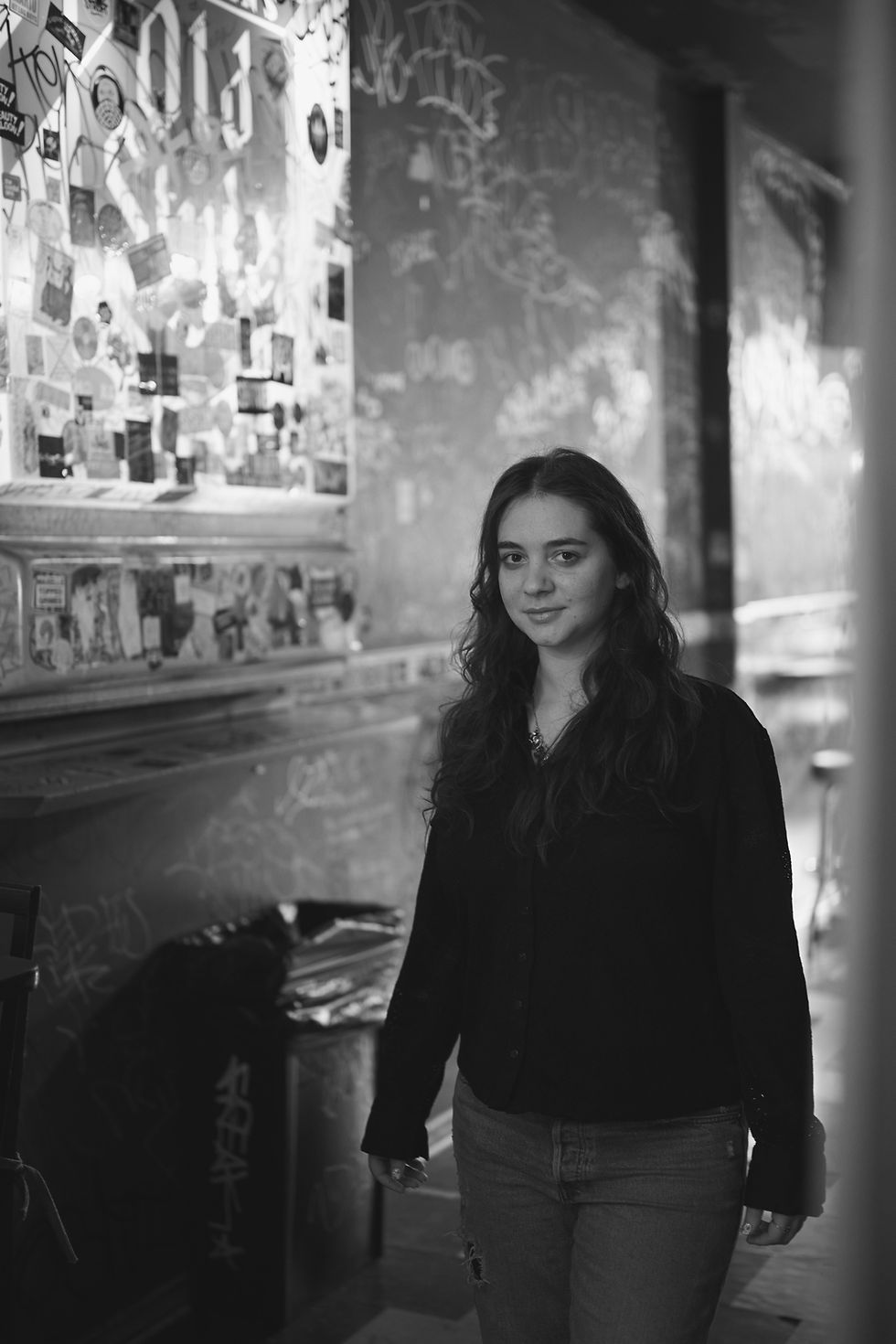
Published in issue 6 of Raging Opossum Press, Kaltra Seferi is a momentous artist from Chicago whose artistic pursuits have built sanctuaries for many. With many of her pieces, the viewer can see her background in architecture as it appears in her collaging together old cities to make new utopian ones. In her own analyzation of her work, Seferi points out to us the issues in the world and how art is a place both the artist and the appreciate can escape into—following this idea all the way through and coupling it with her background in architecture, Seferi quite literally builds entire new worlds for people to explore.
Seferi got her start in the art world by being inspired by her older brother, who had wanted to be an artist too. Inspired by his legacy, she went after the same calling, until—like so many artists before her—her parents pointed out that making a living as an artist is one hell of a challenge. Begrudgingly taking that advice, she set her eyes on architecture school as she saw the artistic draw of the job as a place where she could simultaneously make a living and pursue her craft.
Seferi followed her career in architecture up until the pandemic happened and she was laid off from two jobs within six months. Locked down and jobless, she was not dissuaded at all and took this as a sign to commit herself to her art. Drawing from the isolation of the pandemic, she began to churn her creativity into awe-inspiring pieces of work and her career bloomed from the isolation of lockdown.
It has been mentioned how Seferi’s work blends the architectural world with that of the surreal, but what inspired this idea? As she puts it, the state of the world. Art, as we know, is inherently political. Seferi sees her art both as her meditation and art therapy for herself, a way to build new utopian worlds to escape into and offer sanctuary to the viewer. This started with a series she did on Chicago. Chicago, as many know, is one of the most segregated cities in the country. Seeing the issues paramount in our own city from this, Seferi’s first ambition was to build a “utopian” Chicago by traveling to neighbors all around the city from the South, West, and North side and taking pictures of them that she then collaged together to create a city united as one. This project opened her eyes to the potential of how her work could, literally, create new worlds. While having been an artist forever, this springboarded her series of pieces focused on cityscapes.

However wonderful we, as viewers, see the artist’s work, the motivation is still consistently hard to find for the one actually creating it. Seferi has been hard at work at her craft for years, but how does she maintain her drive to create? Her answer may surprise some of our readers, but to her own admission she had actually stopped making art quite a few times. However, everytime she did try to throw in the rag she ended up coming back to her work. “When you’re an artist, [art] is an itch that you have to scratch,” Seferi says. “If you don’t, that’s when everything goes to shit.” As Seferi says, creative energy must be used or else the creative will become bored and anxious. To create art is less about career, and more about the need to live.
Furthermore, the community aspect of the art world is another driving factor for Seferi. From organizing gallery showings or doing craft nights with friends, the community of creative spaces becomes another grounding factor. “We’re all suffering through the state of the world separately,” she says. “But then we can come together and work on these things collaboratively.”
Art never exists in a vacuum. All artists are being inspired by the things we hear, read, watch, see. From seeing a moving piece, to hearing a song that makes us dance, to even taking a second to really appreciate Lake Michigan, the world is abound with creativity and things to be wowed by, much more so with the creative pursuits of the wondrous people who surround us. Seferi has her own list of inspirations; impressionism being a large factor as well as surrealism, but so too has Albanian folk art and Seferi’s own relationship to her Albanian culture. As Seferi has gotten older too, she says that her Albanian upbringing has become more and more prevalent in her work. “When I was younger, American work influenced me since it was around,” she says. “However, as I have gotten older and researched my culture more, it’s influenced me more. Especially since so many people in my family I would consider artists, but they would not consider themselves artists. When you’re an artisan creating rugs, or a seamstress creating clothes, they see that as their job and not their artistic pursuit. I’m super inspired by the rugs my grandma made and the clothes my aunts made, even though they themselves don’t consider themselves artists.”

This was also, for Albania at this time, a means of survival. “[Albania] was a communist dictatorship, but it wasn’t actual communism,” Seferi explained when asked. “The bureaucrats had way more money than the regular people…The food, the money, the rations people were getting was not enough to make ends meet, so everyone was selling embroidery. Now, when I make embroidery, I think of all my ancestors who had made embroidery before me.” All of this, as Seferi explains, is art and a fascinating aspect of it. It’s the creation of art done as a means of survival first. Pottery, embroidery, and so much more falls into this category. When someone is making a beautiful plate, their first thought is that they need something to eat off of and then the beauty flows from that need. As Seferi puts it, this is at the cornerstone of not just her own art, but art in general.
You can see this in Seferi’s own ever changing artistic forms. As a long time painter, she then shifted to more textile forms of expression. Seferi’s first reason for this change is, simply, she had no more room on her walls for paintings! However, she also points to a greater cultural shift to the tactile arts in recent years. As times get more and more uncertain, from the pandemic to our unstable political and economic structures of today, Seferi points to this move of people making more practical art as if we are all, collectively as a society, preparing for the worst by reteaching ourselves how to make clothes, jewelry, rugs, and so much more. Seferi has seen and heeded this call herself, and has made it part of her mission to find dying forms of art and learn and create them. “It’s my duty as an artisan to save these traditional techniques,” she explains. “Thousands of years ago people were weaving silk that our modern technology can’t even get close to recreating. There’s been a call…and lots of [people] are answering… When you start mixing mediums, there’s no threshold. When I paint then I can embroidery on it and turn it into a sculpture! I’d like to spend my time creating completely new things.”

A huge motivation for Seferi is her dreams. As she puts it, the Universe has ideas it wants to put into the world and when you get an idea, that’s the Universe asking you to be its vessel. If you don’t act on it, it’ll then give it to someone else. With this mentality, Seferi approaches her dreams and intuition with a well-placed reverence and once she feels the tinge of inspiration or has an intriguing dream, always tries to follow it through. An example of this is how Seferi likes to make leather journals and recently got the idea to start hot foiling them. After checking around the internet, she didn’t see anyone else doing it. She does it, but doesn’t post or share her ideas. Then, in this past month (February 2026), she has seen a massive uptick of people hot foiling journals! She uses this as a point of proof to artistic waves of the Universe, God, “Or whatever you want to call it,” she says. “I didn’t answer fast enough, so now other people have answered.”
Seferi also sees the current state of the world as us going through a massive art renaissance, as more and more people seem to be rejecting technology for human crafted things. People have begun to appreciate the process, nationally, of homemade goods, valuing the work of a craftsman over something quickly created by technology, and people are willing to pay for the hand maid work. As people crave for experiences and life outside of their phones, they are turning more and more to the arts, both as consumers and creators. In part, this is also due to the rise of AI, Seferi points out. As AI slowly poisons creative spaces, not to mention our world with its environmental impact, more and more people have rejected it and turned to man-made work, putting more and more value onto something that someone else has labored to produce. Furthermore, as AI becomes a catalyst for more and more layoffs, as our unemployment rates rise higher and higher once again, Seferi sees a wave of people creating similar to that of the wave that rose during the COVID-19 pandemic. As she points out, that was a time where many people were laid off, and with this newfound free time turned to art now that they had the time. In doing this, people were discovering not only a whole new skillset present in themselves but also their love for it, and were able to continue that through into this year of 2026. Seferi sees a similar thing happening with AI, that as this takes people’s jobs from them people will rapidly begin to turn to making things themselves, either from crafting necessities in the form of clothes, pottery, furniture, and more but also, now that there is time to do so, creating art to share with themselves and amongst loved ones.
Being in the public eye, especially as an artist, is intimidating. Seferi is no different and has often been very private about her own work. Even when people would push her to share, she wouldn’t want to. However, as people continued pushing her she began to heed it and saw the impact of her own work. She didn’t fully start realizing the impact her art could have on her community until she was curating art shows and people were submitting work for them, quoting Seferi’s work as their inspiration for creating the pieces they were showcasing. In turn, these pieces inspired Seferi. Seferi says this, and other instances like it, has kept her going and kept pushing her to create. The impact she has been able to see her art have on people, seeing the peace and comfort that what she created from her own peace and comfort is something she is not only thankful for but is coal on the fire to keep her going.
Her uncle was a famous artist, and she saw how he would hide from people. With that, even though she knew she always wanted to be an artist, she knew she never wanted to be famous. However, she has now seen the impacts of her work, has seen how it has moved her and seen the community form around it. “I’ve watched people become friends at my art shows,” she exclaims with glee. Seeing this power of art has taken the question of fame out of the equation and has showcased its communally uplifting properties of both healing people and bringing people together. Fiscally, the power of the art community became clear to Seferi during 2020 when she started selling work for five dollars to raise funds to donate to help single mothers, and not only was she able to raise tons of money for donations but was surprised by how many people donated way more than she asked for because they believed it was worth more and also to do what they could to help. Seferi has seen, from her own work, the power of art to heal the individual and build connections, as well as the power to create actual change as she has been able to raise money for various mutual aid initiatives with her own work. “Art is the most powerful form of resistance outside of a gun,” Seferi says with a smile.


